


Stainless steel
The origins of stainless steel date back to the 19th century, when work began in France on the addition of chromium to carbon steel to protect the material in acidic environments. As such, austenitic steel (with chromium and nickel additions) was patented by German engineers at the Krupp plant.
However, it was not until the early 20th century, when Harry Brearley was working on an alloy to improve the durability of rifle barrel tubes, that the nomenclature of stainless steel began to be used. The Englishman succeeded in this by adding chromium and nickel to the alloy in the right proportions. Practically in parallel to the Englishman's work, a method for the mass production of this steel was developed in France
We are currently dealing with it in almost every area of life. It is widely used in the food, chemical, petrochemical, automotive, construction and many other industries.
Right next to the precise choice of steel grade, of which there are plenty to choose from! (the most common are shown in the table below) for some components, the surface finish is equally important. A surface characterised by greater roughness (with deeper grooves) is more prone to corrosion. as chloride ions can more easily collect in its area and destroy the passive layer.
In contrast, on a polished surface, the same ions have this task made much more difficult. This is why it is so important to precisely define and agree on the favourable characteristics of the surface finish.
TABLE OF CONTENTS
Types of stainless steel
due to the crystalline structure
Ferritic steel - owes its name to the ferrite present in its structural structure. The main alloying addition, apart from a small amount of carbon (1.2%), is chromium (11.5-17%). Some grades are also enriched with molybdenum (Mo), titanium (Ti) or niobium (Nb). It is a magnetic steel. It cannot be hardened by heat treatment during production, but can be hardened by cold working.
Application:
automotive, food, oil, coke; chemical industry - and also for the manufacture of kitchen equipment, household appliances and components for photovoltaic assembly.
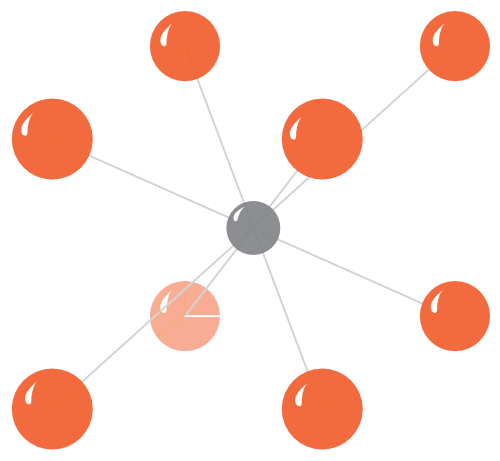
Austenitic steel - The name refers directly to the structure, i.e. the so-called austenite. It contains up to 0.15 % of carbon and 16-21% of chromium and, above all, a minimum of 8% of nickel (Ni) additives, giving it a high corrosion resistance. This property increases with further alloying additions - such as chromium, molybdenum and titanium. Unlike martensitic steel, austenitic steel is not hardened during the production process. It also has almost twice the elongation values of ferritic steels.
Application:
environments characterised by high temperatures, high humidity, high mechanical stress; used primarily in the chemical and petrochemical industries, construction, aeronautical, railway and shipbuilding, structural engineering or in the manufacture of white goods.
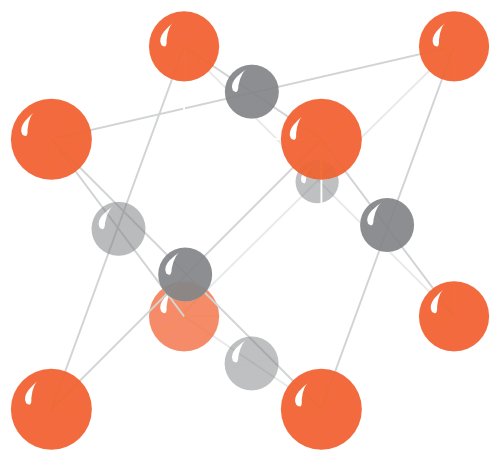
Martensitic steel - Austenitic steel cooled during the production process hardens and acquires a martensitic structure. Although not as corrosion resistant as austenitic and ferritic steels, it has high strength properties and high abrasion resistance. For a stainless steel, it has a relatively high carbon content (0.08 to 0.5%). The chromium content of this steel is 12-17.5%. Martensitic steel is characterised by significantly higher hardness and wear resistance than ferritic steel and austenitic steel, but is difficult to weld. The martensitic structure obtained is magnetic.
Application:
Low-aggressive environments; used primarily to manufacture: screws, springs, pins, pump parts, valves for hydraulic presses, knives, cutting tools, surgical instruments.
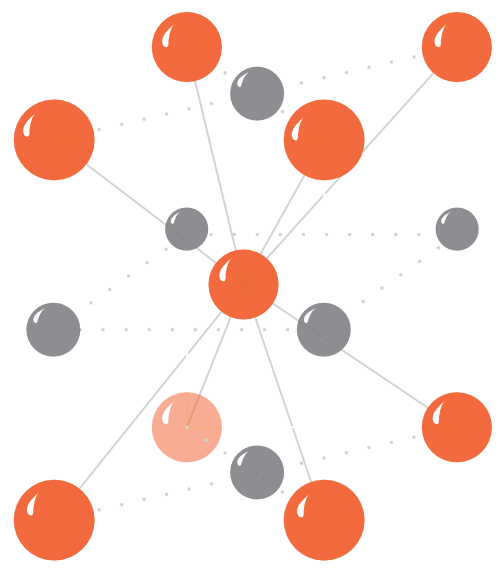
Duplex steel - which is a steel with a two-phase ferritic-austenitic structure that contains 16-29% chromium, up to 1.2% carbon, 3.5-8% nickel, 0-4.5% molybdenum and the addition of nitrogen. Duplex steels are steels that retain high corrosion resistance, also in acidic environments. They fulfil at a high level the strength properties that characterise ferritic steels and have a relatively low coefficient of thermal expansion compared to austenitic steels.
Application:
in environments with a high chlorine content (e.g. water desalination, biofuel production, hydraulics - in oil and gas pipelines), as a replacement for austenitic steels in various structures and projects in the food or chemical industries.
Heat-resistant steel - that is steel resistant to the corrosive effects of oxidising gases (chemical corrosion), abrasion and melting in high-temperature environments. The upper limit of heat resistance is between 800 - 1200 degrees C - depending on the composition of the steel grade.
Application:
in environments exposed to fire and/or high temperatures (furnace components, steam boilers, hot gas fans, carburisation boxes, combustion chambers of gas turbines and valves of reciprocating combustion engines)
Stainless steel comparison table
with mechanical properties
| STRUCTURE | EN | PN | AISI | DIN |
PLASTICITY LIMIT Re (Rp0.2)
[N/mm2] min. |
TENSILE STRENGTH
Rm [N/mm2] |
ELONGATION AT BREAK
A5 [%] min |
HB hardness max.
|
| Ferritic | 1.4000 | 0H13 | 403,410S | X6Cr13 | 230 | 400-630 | 19 | 180 |
| 1.4003 | - | - | X2CrNi12 | 320 | 450-650 | 20 | 180 | |
| 1.4016 | H17 | 430 | X6Cr17 | 280 | 450-600 | 20 | 160 | |
| 1.4510 | 0H17T | 439 |
X3CrTi17 X6CrTi17
|
240 | 420-600 | 23 | 180 | |
| Martensitic | 1.4006 | 1H13 | 410 | X12Cr13 | 205 | <600 | 20 | 200 |
| 1.4021 | 2H13 | 420 | X20Cr13 | 345 | <700 | 15 | 225 | |
| 1.4028 | 3H13 | 420 | X30Cr13 | 345 | <740 | 15 | 235 | |
| 1.4031 | 4H13 | 420 | X39Cr13 | 345 | <760 | 12 | 240 | |
| 1.4034 | 4H13 | 420 | X46Cr13 | 345 | <780 | 12 | 245 | |
| 1.4122 | 3H17M | - | X39CrMo17-1 | - | <900 | 12 | 280 | |
| Austenitic | 1.4301 | 0H18N9 | 304 | X5CrNi18-10 | 230 | 540-750 | 45 | 215 |
| 1.4305 | - | 303 | X8CrNiS18-9 | 190 | 520-700 | 35 | 190 | |
| 1.4306 | 00H18N10 | 304L | X2CrNi19-11 | 220 | 520-670 | 45 | 200 | |
| 1.4307 | - | (304L) | X2CrNi18-9 | 220 | 520-670 | 45 | 200 | |
| 1.4310 | 1H18N9 | 301 | X10CrNi18-8 | 250 | 600-950 | 40 | 215 | |
| 1.4401 | 0H17N12M2 | 316 |
X5CrNiMo17-12-2
|
240 | 530-680 | 40 | 215 | |
| 1.4404 | 00H17N14M2 | 316L |
X2CrNiMo17-12-2
|
240 | 530-680 | 40 | 200 | |
| 1.4435 | - | 316L |
X2CrNiMo18-14-3
|
240 | 550-700 | 40 | 215 | |
| 1.4436 | - | 316 |
X3CrNiMo17-13-3
|
240 | 550-700 | 40 | 215 | |
| 1.4438 | - | 317L |
X2CrNiMo18-15-4
|
240 | 550-700 | 35 | 215 | |
| 1.4439 | - | (317LMN) |
X2CrNiMoN17-13-5
|
290 | 580-780 | 35 | 225 | |
| 1.4529 | - | - |
X1NiCrMoCuN25-20-7
|
300 | 650-850 | 40 | 250 | |
| 1.4539 |
0H22N24M4TCu
|
904L |
X1NiCrMoCu25-20-5
|
240 | 530-730 | 35 | 230 | |
| 1.4541 |
0H18N10T 1H18N9T 1H18N10T
|
321 |
X6CrNiTi18-10
|
220 | 520-720 | 40 | 215 | |
| 1.4547 | - | - |
X1CrNiMoCuN20-18-7
|
320 | 650-850 | 35 | 225 | |
| 1.4550 | 0H18N12Nb | 347 |
X6CrNiNb18-10
|
220 | 520-720 | 40 | 230 | |
| 1.4571 |
H17N13M2T H18N10MT
|
316Ti |
X6CrNiMoTi17-12-2
|
240 | 540-690 | 40 | 215 | |
| Duplex | 1.4362 | - | 2304 | X2CrNiN23-4 | 450 | 600-850 | 20 | 290 |
| 1.4410 | - | 2507 |
X2CrNiMoN25-7-4
|
550 | 750-1000 | 15 | 310 | |
| 1.4460 | - | 329 |
X3CrNiMoN27-5-2
|
460 | 620-880 | 20 | 260 | |
| 1.4462 | - | 2205 |
X2CrNiMoN22-5-3
|
500 | 660-950 | 20 | 293 |
The data in the table above is indicative.
Comparison of the properties of stainless steels
| TYPE OF STEEL | MAGNETICITY | CORROSION RESISTANCE | CONTINUITY | RESISTANCE | SPAWARABILITY |
| ferritic | yes | average | average | high | low |
| martensitic | yes | average | low | average | low |
| austenitic | not | high | very high | very high | very high |
| duplex | yes | very high | average | low | high |
| heat-resistant | yes | average | average | high | high |
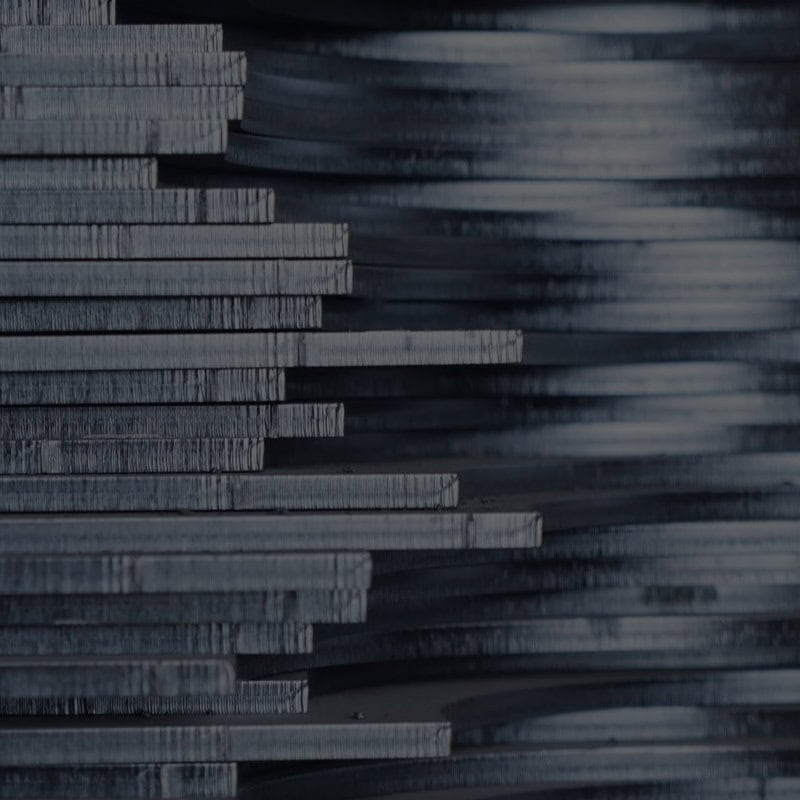
Differences between cold-rolled sheets
and hot-rolled
| PROPERTIES | COLD-ROLLED SHEET | HOT-ROLLED SHEET |
| HEAT TREATMENT | the recrystallisation temperature is approx. 600°C | the recrystallisation temperature is on average 600°C and the process temperature as high as 1300°C |
| APPLICATION |
industrial sector: production of thin sheets and strips, films and tubes or small diameter rods automotive industry white goods industry electronics industry |
industrial sector: in the manufacture of thick sheets which are structural elements of bridges, machinery, containers or vehicles |
| FAILURES | harder to process further | slightly alters the previous strength properties |
| BENEFITS |
increased strength, without significant deterioration in plastic properties smooth, finely finished surface speed and high efficiency thanks to surface treatment |
has high ductility and malleability improved steel grain size and therefore better mechanical properties of the material easy to process further |
| NOTES |
However, cold and hot rolling of sheet metal involves the development of inherent stresses in the metal parts. Even at low processing temperatures, there is a risk of unwanted warping, deformation or cracking of the sheet, depending on the force used for plastic forming. |
|
Stainless steel corrugated sheets
DIN 59220

ASTM A793 - Pattern B

Basic surface finishes of stainless steel sheets
| DISCLAIMER | SHEET TYPE | DESCRIPTION |
| 1D | HOT-ROLLED SHEET | Scale-free surface. The most common finish, with the highest corrosion resistance. |
| 2B | COLD-ROLLED SHEET | The most popular cold-rolled finish. Smooth, retains flatness well. Finish used for further processing. |
| 2R / BA | POLISHED SHEET | Mirrored surface, very smooth. Often protected by a film. |
| 240 / 320 / 4MN / DUPLO | GROUND SHEET | Unidirectional surface texture, poorly reflective. |
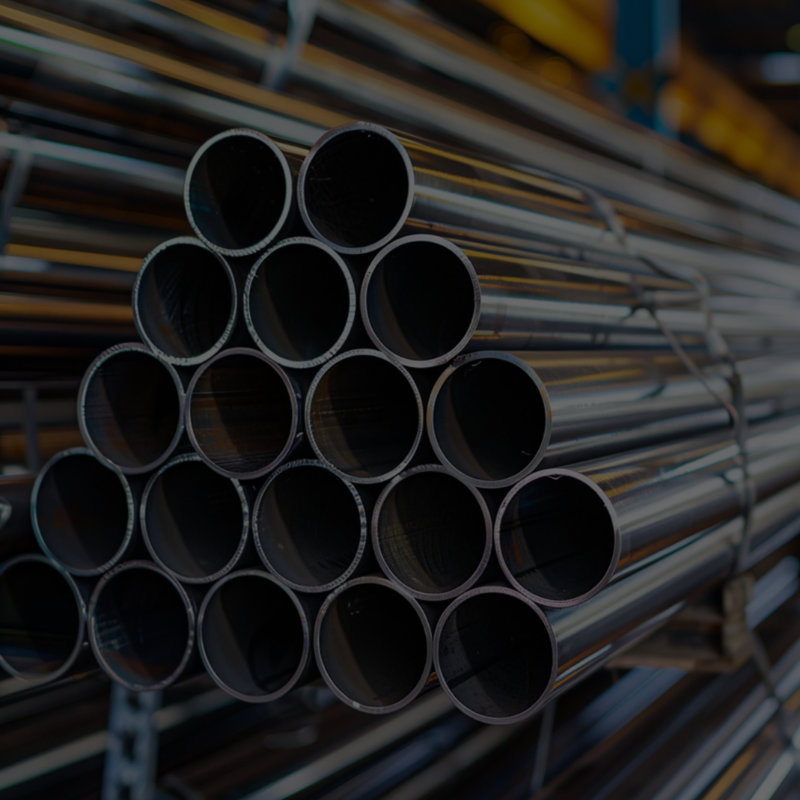
Seamless pipes
EN 10216-5 - pipes for pressure applications,
EN 102297-2 - pipes for mechanical and general technical applications,
Structural tubes (welded)
Structural tubes (EN 10296-2):
Weld factor V=0.8*,
Surface: raw, ground, polished
Installation pipes (EN 10217-7) - these are structural pipes that have passed destructive tests, this means that the strength around the circumference is the same:
Weld factor V=1*,
Certificate 3.1,
Surface: raw, ground, polished and etched
Food pipes - these are pipes designed for the food industry, the internal seam removed, the internal surface of the pipe must be perfectly smooth,
*V - is the ratio of the weld strength to the pipe material strength
(V=1 means that the strength of the pipe around its circumference is the same)
Perforated sheets
Perforated sheets are manufactured from the highest quality stainless steel, acid resistant, aluminium, brass and copper. They are characterised by durability, lightness and universality of application. They are used in the engineering, food, agricultural and construction industries and as decorative elements.
Holes are made in various shapes, including: circular, cylindrical, conical, conical-cylindrical, square, rectangular, hexagonal, bowl-shaped, elongated and others according to individual designs.
Due to their widespread decorative use, perforated sheets are often covered with protective and decorative coatings.
Rv
Round holes,
60° passing system

rg
Round holes,
straight 90° system

rd
Round holes,
45° diagonal arrangement

qg
Square holes,
straight 90° system
qv
Square holes,
60° passing system

qd
Square holes,
45° diagonal arrangement

lv
Longitudinal openings,
system passed

lg
Longitudinal openings,
simple system
hv
Hexagonal holes,
hexagonal,
60° passing system
deco
Holes
decorative


Brzezie, 92 Szlachecka St.
32-080 Zabierzów
NIP: 678-314-93-06
REGON: 122910963
Monday to Friday
7.30 a.m. to 3.30 p.m.
Monday to Friday
7 a.m. to 3 p.m.
 English
  Polish